Most property management teams feel confident about their hardware. The panels are inspected, alarms are tested, and monitoring contracts are in place.
What is less clear is this. When something goes wrong at 2 a.m., how do residents actually know what to do, and how do you know who is still at risk?
That gap is why many operators are moving from ad hoc notices to a dedicated tenant communication system. Platforms like RedFlag tennent communication system give property managers a simple way to send fast, targeted apartment emergency alerts and receive two-way tenant messaging in return. The goal is clear direction and real time visibility when alarms are sounding and people are scared.
Two real incidents show what happens when that communication layer is weak.
Community Towers, Meriden, Connecticut
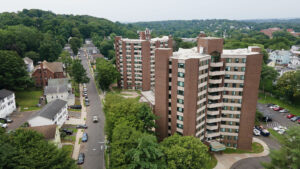
Meridian Towers
In Meriden, Connecticut, residents at Community Towers, two 11-story high rises operated by the Meriden Housing Authority, received a notice under their doors. It told them that their building fire alarm system no longer automatically alerted the fire department. If the alarm sounded, they were now responsible to call 911 themselves.
Local reporting notes that roughly half of the residents use wheelchairs and that elevator reliability has been an ongoing concern, making evacuation difficult for many tenants. The change followed the shutdown of the citywide master box fire alarm system because of aging infrastructure and high repair costs.
Arthur Capper Senior Apartments, Washington, DC
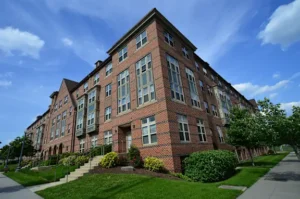
In Washington, DC, a 2018 fire at the Arthur Capper Senior Apartments displaced m
Arthur Capper Senior Apartments
ore than 100 residents. Officials initially said everyone had been evacuated. Five days later, inspection crews found a 74 year old resident still alive in his apartment, trapped in the damaged building without power or water until workers heard him call out.
Subsequent reporting and lawsuits raised questions about alarm performance, maintenance, and how residents were accounted for during and after the fire.
Very different buildings. Different owners, different cities. In both cases, alarms and infrastructure were part of the story. So were basic questions that every regional or national apartment or multi-unit operator should be asking.
How would my residents actually know what to do if the alarm rang right now?
How would we know who is safe, who is stuck, and who never got the message?
Where Tenant Communication Failed At Community Towers And Arthur Capper
In both Community Towers in Meriden and Arthur Capper in Washington, DC, the infrastructure problems were real. The deeper issue though was how little structure there was around resident communication once something went wrong.
Fragile or missing alerts
At Community Towers, a major change in how alarms reached the fire department was communicated with a single paper notice telling residents to call 911 if they heard the alarm.
At Arthur Capper, residents later reported that alarms did not sound properly during the fire and investigators confirmed alarm deficiencies.
In both cases, safety depended on alerts that were either one time or unreliable.
No structured two-way channel
Neither building had a simple way to push clear apartment emergency alerts and collect replies:
No systematic way to ask residents “Are you safe” or “Do you need help.”
No way to see, in one place, which units had responded and which had not.
Information moved through hallway alarms, 911 calls, door knocks, and word of mouth, not through a real tenant communication system.
Communications are reaching churned tenants, or not reaching new tenants at all
New tenants are joining as old tenants churn. During a disruption, property managers relying on manual processes will be using obsolete lists that reach the wrong people (those who are no longer tenants on the property) as well as missing those who just joined.
Poor visibility and weak documentation
At Arthur Capper, officials initially believed all residents were out, then found a 74 year old man still inside five days later.
At Community Towers, there is no clear way to show who was notified, when, or how if an alarm goes off tonight.
That combination is the real pattern: alarms and inspections on paper, but an improvised, undocumented communication layer when residents most need clear, two-way tenant messaging.
What a modern tenant communication system like RedFlag Alerts should do
A modern tenant emergency communication system is not just a group text tool. It is a practical control that sits alongside alarms, monitoring, and emergency procedures.
RedFlag Alerts gives property and asset managers six things that matter most.
Multi channel apartment emergency alerts
You need to reach residents where they actually are, on devices they actually check. With RedFlag Alerts, your team can send apartment emergency alerts from one screen through:
SMS text alerts
Voice calls for residents who prefer or need audio
Email for longer explanations or follow up documents
Mobile app push notifications where adoption is strong
Desktop or lobby signage alerts in communities with digital displays
You do not have to use every channel every time. You have enough options that residents reliably see the message.
Targeting by property, building, floor, and unit
In a regional or national portfolio, blanket alerts are blunt tools. RedFlag Alerts, as property management notification software, lets staff:
Target alerts to a single community, tower, or wing
Drill down to floors, stacks, or custom unit groups
Maintain groups for residents who may need extra assistance
That level of control keeps alerts relevant and avoids desensitizing residents with constant “everyone, everywhere” messages.
True two-way tenant messaging
Two-way tenant messaging is what turns a broadcast into a managed incident. With RedFlag Alerts you can:
Request simple acknowledgements, such as “Received” or “Safe”
Ask quick status questions like “Do you need assistance evacuating” with clear reply options
Capture inbound texts or app responses from residents who see hazards, smoke, leaks, or security issues
Real time responses help you prioritize staff attention and give better information to emergency services.
Automatically sync with your tenant management system
Accurate contact data is the foundation of any tenant communication system. With RedFlag Alerts, you can:
Connect directly to tenant management systems such as Yardi or RealPage so resident contact data stays in sync with your source of truth
Keep other properties current through secure manual list uploads when a direct integration is not in place
Set up and maintain these syncs with minimal IT involvement, often as part of a short onboarding session
Live reporting and an audit trail
During an event, teams need to see what is happening. Afterward, they need proof. RedFlag Alerts lets you:
Display delivery and response rates for each alert
Highlight units or groups where responses are missing
Store time stamped logs of all messages and replies
This is how you move from “we think we told people” to “here is exactly what we sent, when we sent it, and how residents responded.”
Simple workflows that hold up in real incidents
Complex tools fail when the one expert user is not available. RedFlag Alerts is built so that:
Workflows are clear and guided, and any trained staff member can run them
Templates are ready for common scenarios such as fire alarms, water shutoffs, power outages, severe weather, and security issues
The interface is mobile friendly so building staff can act in the field, not just from a desk
In practice, a new assistant property manager should be able to send a targeted alert in under a minute during an incident, without hunting for hidden settings.
Practical next steps for property managers
You cannot change what happened at Community Towers or Arthur Capper. You can decide not to repeat their patterns. Here is a quick checklist to pressure test your current approach.
Seven questions to ask your team
If an alarm went off at 2 a.m. tonight, how long would it take to send apartment emergency alerts to every affected resident using at least two channels.
Can you target alerts by building, floor, unit, or location, or do you have to send the same message to everyone.
Do you have two-way tenant messaging in place so residents can acknowledge alerts and request help, and can your staff see those responses in real time.
How confident are you that your resident contact data is accurate across all properties without last minute spreadsheet fixes.
In your last serious incident, did you know who had received messages and who had not, or did you rely on manual calls and assumptions.
If a fire marshal, regulator, or insurer asked for a time stamped log of resident communications during an emergency, could you produce it easily.
Can onsite staff trigger and send alerts from a phone in the field using simple steps, or must they find a computer and navigate a complex system.
If several answers make you uneasy, that is your signal. The issue is not only hardware or code compliance. It is the strength of your tenant communication system.
Exploring a modern platform like RedFlag is one practical next step. A short demo can quickly show whether your current mix of notices, PA systems, and phone trees will hold up when the alarm rings and residents are waiting for clear, timely answers.